

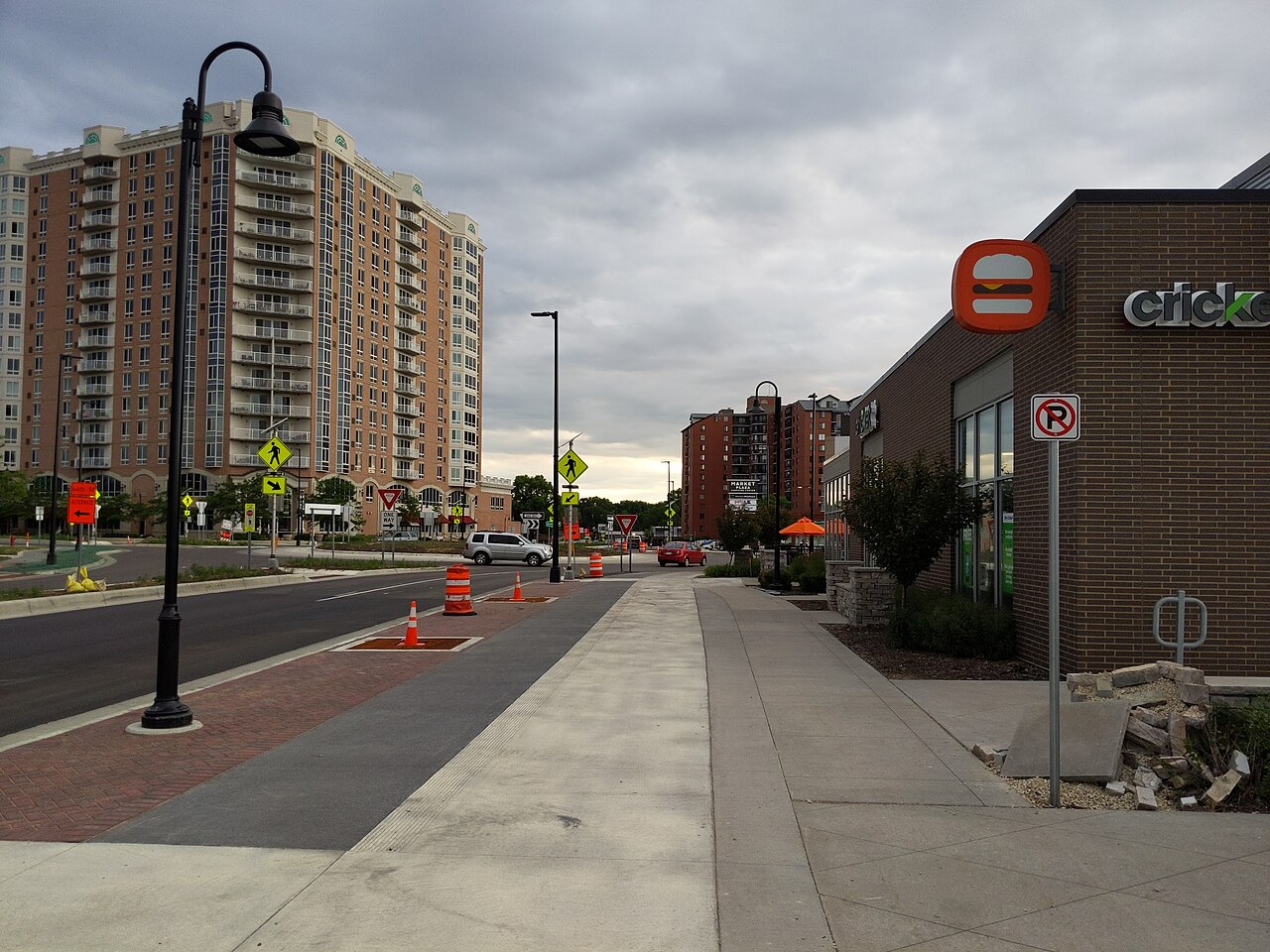
The Fort Snelling connection.
Richfield's claim to be Minnesota's oldest suburb traces all the way back to the 1820s, to soldiers and traders at Fort Snelling who farmed and lived on the land north of the fort, what would eventually become this city. That makes Richfield older than the state itself, and gives it a residential continuity that no other Hennepin County suburb can match. But the continuity isn't in the housing stock. It's in the location.
Riley Bartholomew on Wood Lake.
In 1852, Riley Bartholomew built a house on the eastern shore of Wood Lake. The restored Riley Lucas Bartholomew House is still standing and is listed on the National Register of Historic Places. It is one of the very few survivors from the pre-suburban era, almost everything else from that period has been demolished, rebuilt, or absorbed into later development.
The 1908 Village.
Richfield officially became a village in 1908. From 1908 until 1950, the local government was a small operation, a president, three trustees, and a city clerk. The population through those four decades remained modest. Richfield was a small village south of Minneapolis with farmland, lake-shore homes, and a few small commercial blocks. The pre-1950 housing stock that survives is mostly closer to the Minneapolis border and consists of older fieldstone, brick, and early-block foundations from the village era.
Glacial till and Wood Lake.
Richfield sits on glacial till, the unsorted mix of clay, silt, sand, and gravel deposited by the retreating Wisconsin glacier. Till is structurally fine but unforgiving for water management. The clay content holds water against foundations. The embedded sand and gravel pockets transmit it unpredictably. The clay-bowl effect, where backfilled soil around a foundation traps water against the wall, is the most common failure mode in Richfield basements.
Wood Lake on the east side of the city, and the smaller lakes and wetlands throughout, add corridors of higher water table to certain neighborhoods. Properties near them deal with shallow groundwater every spring.
17,500 to 31,800 in four years.
Then the post-war wave hit. Between 1950 and 1954, Richfield's population went from just over 17,500 to almost 31,800. That's an additional 14,000 residents, and at the average household size of the era, roughly 4,000 new houses, in four years. On November 7, 1950, residents voted to switch to a city-manager form of government to handle the growth. In 1954 the village became a city.
What got built was the standard post-war product, repeated across the city: small ranches and minimal-traditional starter homes on cinder block foundations, designed for GI Bill veterans on $25-a-month payments. Drain tile was a single perforated pipe at the footing. Dampproofing was a thin tar coat. Grading was whatever the bulldozer left. Today, most of Richfield's housing stock is exactly the same as it was in 1954, except seventy years older, with drainage systems that have given up at roughly the same time.
Why Richfield basements leak today.
A Richfield leak is almost always one of two stories:
- The 1950s cinder-block rambler. By a wide margin the most common. Wall has hundreds of failing mortar joints. Original drain tile silted up after seventy years. Surface grading shifted by every owner. Clay-bowl pressurization every spring.
- The pre-1950 village-era home or Wood Lake property. Older block or stone foundation, mortar long-since failing, often with finished basement remodeling that has trapped moisture in the wall.
What this means for your home.
Most Richfield homeowners we meet live in the 1950s housing stock, and for most of them the honest answer is a full interior drain tile system with a modern sump and proper vapor management. The original 1950s drainage has run out its useful life. The wall has run out its mortar. The yard has run out its slope. We'll quote that work directly and back it with our lifetime transferable warranty.
For the rare Richfield home that isn't a 1950s rambler, older lake-shore homes, or the occasional newer infill, we look first at the surface water plan. Often the high-leverage opening move is a sump replacement, a downspout and grading correction, and a flush of the existing tile. Those are obvious contributors worth investigating first, addressing them, depending on your goals for the space, can save thousands and extend the time before a full system is necessary. We'll tell you which.
Four thousand houses were built here in four years. They are aging together. The next decade will be expensive for a lot of Richfield homeowners. We'd rather it not be expensive for the wrong reasons.