

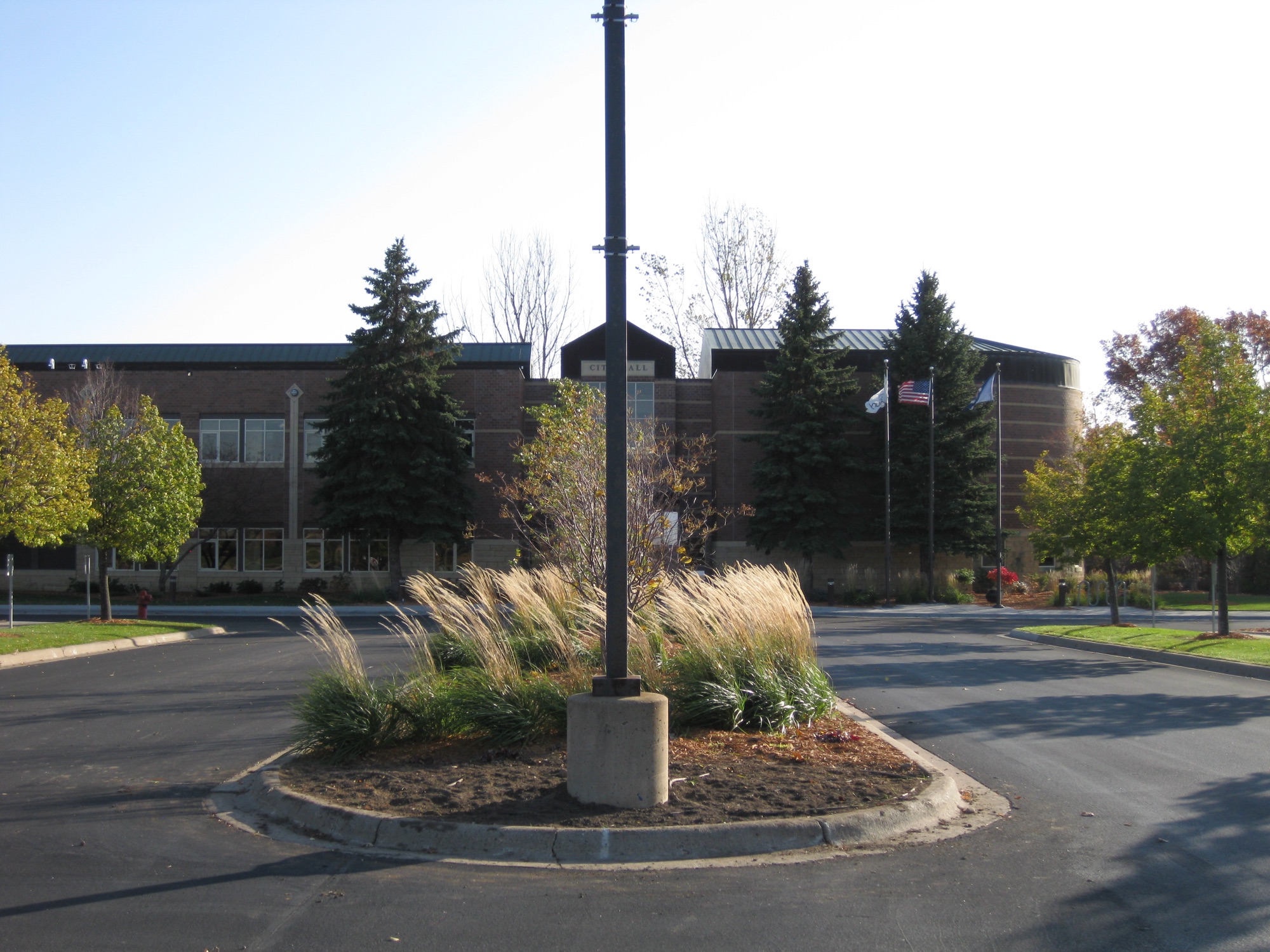
Red Rock Township and Judge Woodbury.
The area was originally part of Red Rock Township, named for a red-painted sacred stone that Dakota communities had used as a meeting place near the Mississippi well before any settlers arrived. The township was reorganized and renamed in the 1850s in honor of Levi Woodbury, a U.S. Supreme Court justice from New Hampshire who never set foot in Minnesota. Naming new Midwest townships after East Coast statesmen was the fashion of the era. The name stuck even after the township itself was eclipsed by the city it eventually became.
Farmland for a hundred years.
For roughly a century after Minnesota statehood, Woodbury was a township of family farms, wheat early on, then dairy and truck crops once the rail lines into Saint Paul made perishables movable. Population grew slowly. A 1950 census put it well under 1,000 residents across an area larger than Saint Paul proper. The land was good for agriculture: gently rolling hills, well-drained moraine soils, and enough small lakes and wetlands to water livestock without the chronic flooding that plagued the river-bottom farms downstream.
Those same conditions, rolling moraine soils, scattered wetlands, a deeper water table than the river towns, are why Woodbury today has fewer of the chronic spring-flood basements you see in places like Blaine or the old Mississippi-flats neighborhoods of Saint Paul. The water problems in Woodbury are mostly different. They're built into the houses themselves and the way the development was platted, not into the underlying terrain.
Village, then city.
Woodbury incorporated as a village in 1959 to get out from under township government, which had no zoning authority and no real ability to control the housing development that was already starting to push east from Saint Paul. By 1967 the village reorganized as a city. The first new subdivisions, modest ranch and rambler neighborhoods along Valley Creek Road and around the original Woodbury commercial core, went up in this period. The housing stock from these years is now sixty-plus years old and increasingly in the window where original infrastructure (drain tile, sump pits, downspout discharges) is at end of useful life.
3M, I-494, and the freeway that built the rest.
The interstate changed everything. Interstate 494 cut the city in half east-west and connected Woodbury directly to 3M's Maplewood campus, downtown Saint Paul, and the Twin Cities labor market in general. 3M's presence in the east metro made Woodbury one of the most accessible large-lot bedroom suburbs in the region. Builders noticed. Developers noticed. By the mid-1980s the city was in full subdivision mode and the original farms were going under the bulldozer in 40- and 80-acre chunks.
The thirty-year boom.
The bulk of Woodbury was built between 1990 and 2020. Discovery, Bailey, the southern lake-area developments, the eastern push toward Lake Elmo, these are post-1990 neighborhoods almost entirely. The housing is poured concrete on engineered backfill, built to the modern Minnesota residential code with deep frost footings, perimeter drain tile, sealed sump basins, and exterior drainage board. On paper the basements should not leak.
In practice, "built to code" means a lot of things, and the code itself does not require everything we'd include on our own crews. Drain tile silts up. Sump pits get installed without backup batteries. Discharge lines freeze. Grading shifts when landscaping gets installed. A poured-concrete wall built in 1998 is still a poured-concrete wall in 2026, but the integrated system around it ages, and the original-builder version was usually the lowest acceptable spec.
Glacial till on Prairie du Chien dolomite.
Surficial geology across Woodbury is dominated by glacial till deposited by the late Wisconsin ice sheets, a mix of Superior lobe and Grantsburg sublobe sediments, generally clay-rich with sandy lenses. Beneath the till sits the Prairie du Chien Group, a carbonate bedrock (mostly dolomite) that can carry groundwater along fractures and bedding planes. In some parts of the city the till is thin and bedrock is close to the surface; in others the unconsolidated drift is fifty feet thick or more.
What matters for your basement: the soils above the bedrock are heterogeneous block to block. A property on the south side of a street can sit on sandy outwash while the property across the street sits on clay-loam till. Water moves through those two soils completely differently, which is why two neighbors with identically-built houses can have completely different basement experiences. We treat every Woodbury home as its own site rather than assuming the neighborhood-wide pattern.
Why Woodbury basements leak today.
A Woodbury leak is usually one of two stories:
- The 1960s–1980s rambler or split-level around the original village core. Concrete block walls. Original drain tile if any. The mortar joints fail, the cove joint leaks, the sump basin has been replaced once already in the mid-2000s. This is straightforward interior drain tile work.
- The 1990s–2010s poured-concrete home in one of the boom-era subdivisions. Wall is structurally fine. The failure is the integrated system: a slowly silting drain tile, an undersized 1/3 HP plastic sump pump, a buried discharge that exits onto a flat side yard. We can usually fix this with a sump replacement, a discharge correction, and a partial tile flush, far less than a full system rebuild, but only after we've verified the wall really is fine.
What this means for your home.
For the older block-foundation homes near the original core, the honest answer is usually a full interior drain tile system with a modern sump and battery backup. We'll quote that directly and back it with our lifetime transferable warranty. For the newer poured-concrete homes, the high-leverage opening move is almost always something less drastic, a sump replacement, a downspout extension, a grading touch-up, a tile flush. Those are obvious contributors worth investigating first, and depending on what we find, they can save you several thousand dollars and several years before any larger system rebuild becomes necessary. The honest read is part of the inspection.