

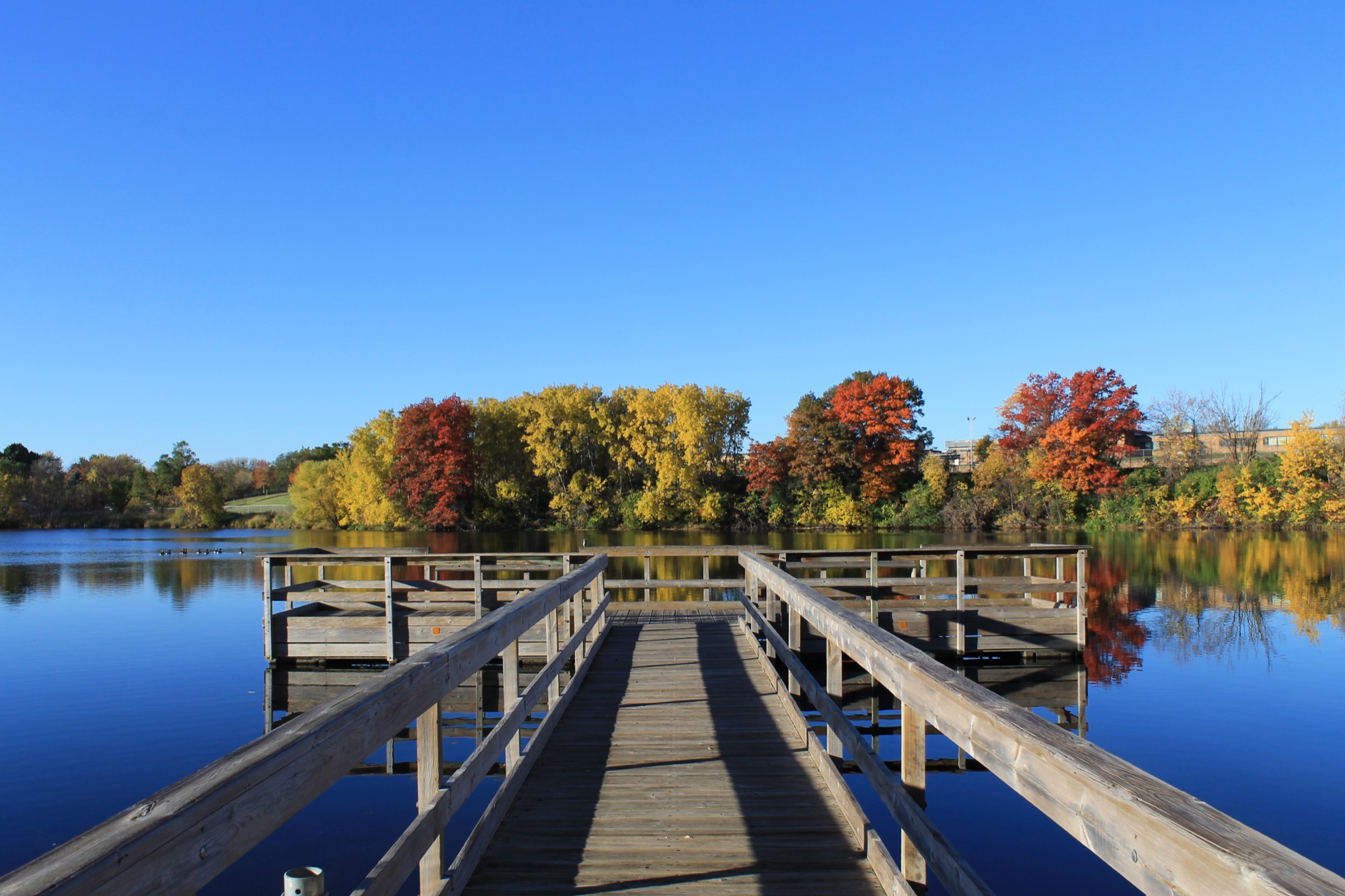
The bluff above downtown.
The original West St. Paul settlement sat on the bluff directly south of downtown Saint Paul, separated from the city proper by the Mississippi River. The bluff position offered better drainage and air quality than the river flats, and the proximity to the growing capital city made it attractive for early residential settlement. The Wabasha Street bridge, the Smith Avenue High Bridge, and the Robert Street bridge eventually connected the two sides; the original residents walked or took ferries.
West St. Paul Township.
The township was organized on the same wave of municipal incorporations that followed Minnesota statehood in May 1858. For thirty years the township was a mix of small farms, river-adjacent industrial parcels, and the residential cluster on the bluff edge. The population grew slowly but steadily as Saint Paul itself filled in and pushed development outward.
The village years.
West St. Paul incorporated as a village in 1889. The next sixty years saw incremental residential development, Victorian and early-1900s homes on the original bluff lots, then 1920s and 1930s craftsman bungalows filling in the streets behind. Population grew through the World War II years as workers from the Saint Paul industries needed close-in housing.
City and post-war boom.
West St. Paul reorganized as a city in 1949, just in time for the post-war housing boom to fill in almost all remaining buildable acreage. The decade after the war added the bulk of the current housing stock, ramblers, story-and-a-half homes, and small two-stories on the standard 50-foot post-war lots. Concrete block foundations were the universal choice. By 1965 the city was effectively built-out.
Robert Street and the commercial spine.
Robert Street has been the city's commercial backbone for over a century, first as a streetcar corridor, then as a US Highway 952 designated route, now as a busy four-lane suburban commercial strip. The street defines East-West orientation for the residential neighborhoods on either side and shapes the storm drainage patterns. Houses near Robert Street experience the runoff from large impervious commercial surfaces; houses further from the corridor have different drainage problems.
Bluff geology and perched water.
West St. Paul sits on the upper edge of the Mississippi River bluff. Surface soils are glacial drift over Platteville Limestone and Decorah Shale bedrock, with the limestone often within twenty feet of the surface. The bluff edge experiences perched groundwater, water traveling horizontally along the top of impermeable shale layers and emerging as basement seepage on homes built across these contact zones. Pickerel Lake and the small valleys feeding it create local low spots where the water table approaches the surface.
This is the same geological condition that affects bluff-edge homes in South St. Paul and Mendota Heights along the same Mississippi bluff system. Water entering a West St. Paul basement isn't always from the obvious source on the property, it can be traveling along bedrock contacts from quite a way uphill.
Why West St. Paul basements leak today.
A West St. Paul leak is usually one of two stories:
- The 1940s-1960s post-war rambler on concrete block. Mortar joints failing at sixty-plus years of age, original drain tile silted or collapsed, sump pit on its second or third replacement cycle. Interior drain tile work is the standard fix.
- The bluff-edge home with perched-water seep. Wall can be relatively sound but water is migrating along the limestone-shale contact and emerging at the cove joint or through hairline wall cracks. Often combines surface remediation with a properly-sized interior drain tile and sump system.
What this means for your home.
For most of the post-war housing stock, the honest answer is a full interior drain tile system with a modern sump and battery backup. We'll quote that work directly and back it with our lifetime transferable warranty. For the bluff-edge perched-water cases, we start with surface remediation, gutters, grading, downspout extensions, to see how much of the problem is the obvious contributors before committing to a larger scope. Either way, the inspection is free and the diagnosis is honest.