

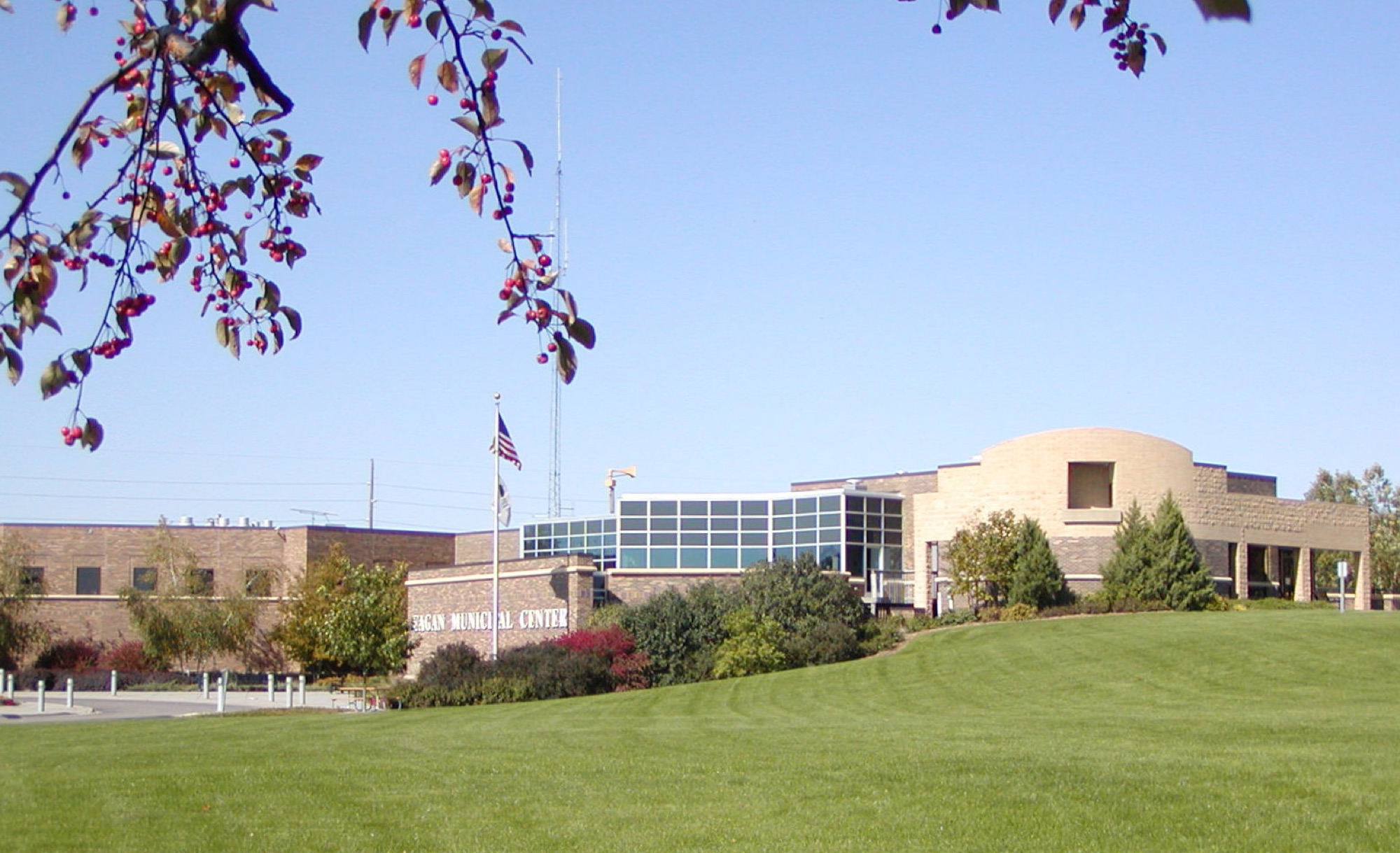
Eagan Township.
Eagan Township was organized in 1860, named for Patrick Eagan, an early Irish settler. The township covered the area between the Minnesota River to the south and what would become Mendota Heights to the north, gently rolling glacial terrain, scattered small lakes, and Lebanon Hills along the southeast edge. For most of the next century the township was farms.
A hundred years of farming.
Eagan grew slowly. Cedar Avenue carried farm traffic north to Saint Paul and south to the Minnesota River. The 1950 census put the township well under 2,000 residents on farms and scattered rural homesteads. The first sign of change was Cedar Grove, a residential development started in the late 1950s on the western edge of the township, anticipating the suburban wave that was already filling in Bloomington and Edina across the river.
The village vote.
The township reorganized as a village in 1972, late compared to most of its neighbors, and became a city in 1974. The push for incorporation was about zoning authority. Township government had no real ability to control where and how subdivisions could be platted, and the developers were starting to circle. The new village government inherited a half-built road network, scattered residential clusters, and a lot of farmland that was about to change hands.
3M, MSP, and the corporate park era.
The corporate parks came first. 3M established satellite campuses in the early 1980s. Northwest Airlines built its headquarters along Pilot Knob Road. Cray Research, then a leading supercomputer manufacturer, set up an Eagan campus. The Cedar Avenue corridor became a high-employment node. The job density attracted the next wave of residential subdivisions, which started filling in the township farmland in 100- and 200-acre chunks.
The boom decades.
Most of Eagan's housing was built between 1990 and 2010. Diffley Road and the southern half of the city filled in with poured-concrete subdivisions built to current Minnesota residential code. The 2000s added higher-end developments along the Lebanon Hills park edge. By 2010 Eagan had passed 65,000 residents and was effectively built-out on its remaining buildable acreage, with continued infill on smaller parcels through the 2010s.
Decorah Shale and Platteville Limestone.
Eagan sits on a complex bedrock geology. Decorah Shale, an impermeable clay-rich rock, and the underlying Platteville Limestone (a fractured carbonate that carries groundwater) outcrop or sit just below the glacial drift across much of the city. The drift itself is late Wisconsin till of varying thickness, thin over some bedrock highs, fifty-plus feet deep in others. The Lebanon Hills area in the southeast features kettle ponds and morainal hills. Western Eagan near Cedar Avenue is flatter terrain over thicker drift.
What matters for your basement: bedrock fracture networks in the Platteville limestone mean groundwater can move along unpredictable paths, and water entering a basement isn't always from the most obvious nearby source. Two homes on the same block can have very different water experiences depending on what's happening twenty feet below.
Why Eagan basements leak today.
An Eagan leak is usually one of three stories:
- The pre-1972 farm-and-village core home. Concentrated near Cedar Avenue and the older Diffley Road neighborhoods. Concrete block, sixty-plus years old, characteristic mortar joint failure. Interior drain tile work is the typical fix.
- The 1980s–1990s subdivision home. Poured concrete with first-generation drainage spec, original drain tile now near end of useful life, original sump pump usually well past its replacement date. Often a partial system update gets the basement back to dry without a full rebuild.
- The 2000s-and-newer construction. Modern poured concrete, structurally sound, but with the universal newer-house issues: undersized original sump pump, no battery backup, surface discharge that freezes or floods the wrong yard. Usually a sump replacement + discharge correction handles it.
What this means for your home.
For the older block-foundation homes, the honest answer is usually a full interior drain tile system with a modern sump and battery backup. We'll quote that directly and back it with our lifetime transferable warranty. For the boom-era and newer construction, the high-leverage opening move is often something less drastic, a sump replacement, a discharge correction, a tile flush, a grading touch-up. Those are obvious contributors worth investigating first, and depending on what we find they can save several thousand dollars and several years before any larger work is needed.