

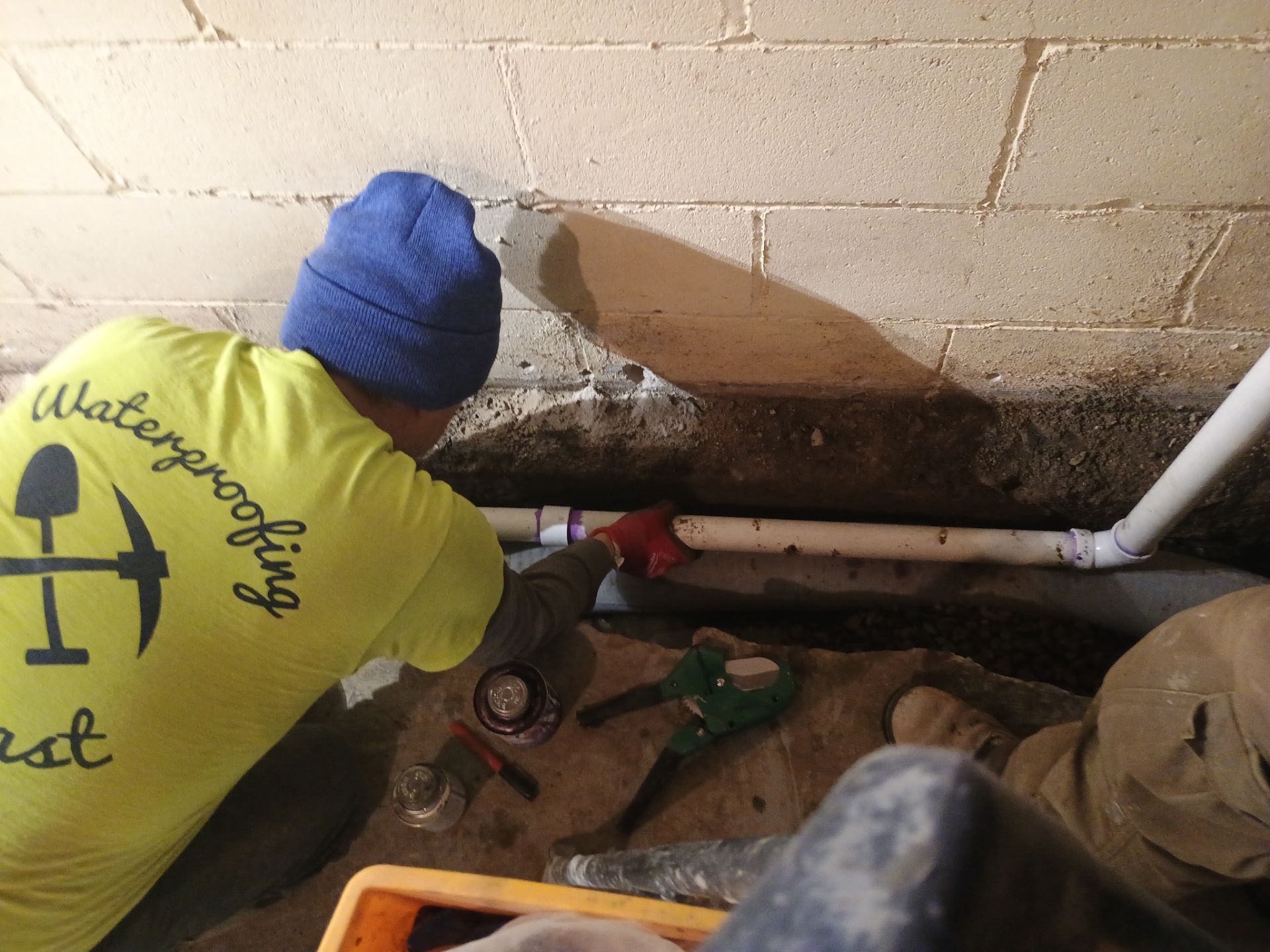
The decision we made and the analysis behind it.
When we started installing backup pumps, we considered both options seriously. Water-powered backups solve the most-cited limitation of battery systems (finite runtime). On paper they look compelling. In practice, after watching how both types performed across hundreds of installs and a decade of Minnesota storms, we came to a clear conclusion. This article is the analysis that got us there.
How water-powered backups work.
A water-powered backup is a clever piece of fluid mechanics. The unit is plumbed into your home's cold water supply with a dedicated 3/4-inch line. When water flows through the device at municipal pressure, it passes through a constricted nozzle that creates a low-pressure zone via the Venturi effect. That low-pressure zone draws water up out of your sump basin through a separate suction line, mixes it with the driving water, and discharges the combined flow to the exterior.
The genius of it: no electricity required. As long as municipal water service is working, the backup pumps. That means in a multi-day power outage where battery systems eventually run dry, a water-powered backup just keeps going. Unlimited runtime is the real advantage.
The cost is twofold. First, the device uses 1 to 2 gallons of municipal water for every gallon it pumps out of your sump. During an active spring runoff event where the backup might run intermittently for days, that's thousands of gallons of municipal water, which shows up on your water bill. Second, the installation requires a code-compliant connection to your potable water supply, with backflow prevention to keep sump water from ever contaminating the municipal supply. That's a more involved plumbing scope than a battery install.
How battery backups work.
A battery backup is mechanically simple. It's a second pump, a smaller 12V DC submersible, mounted in the same sump basin as your primary, with its own float switch and controller, connected to a deep-cycle battery. When the primary pump fails for any reason (power outage, mechanical failure, breaker trip, motor seize), the controller detects the failure and fires the backup from battery power.
The Zoeller Aquanot 508 is the industry workhorse in this category. It pairs with a maintenance-free AGM (Absorbent Glass Mat) battery sized to deliver 4 to 12 hours of typical pumping runtime during an outage. AGM batteries are sealed (no electrolyte to check), tolerate cold basement temperatures, and have a typical service life of 8 to 10 years before replacement.
The limitation is finite runtime. If a major storm takes out grid power for 24 hours during heavy flow, a battery system will eventually deplete. In practice, that's rare, Twin Cities outages cluster around storm events but typically restore within a few hours.
Side-by-side comparison.
| Battery backup (Aquanot 508 + AGM) | Water-powered backup | |
|---|---|---|
| Runtime per outage | 4-12 hours typical | Unlimited (while water service holds) |
| Operating cost | Battery replacement every 8-10 yrs (~$200) | 1-2 gal municipal water per gal pumped, $50-300+ per major event |
| Install requirements | Standard sump install + outlet | 3/4″ potable water line + backflow prevention + drain line |
| Maintenance | None, AGM is sealed | Periodic Venturi cleaning, valve inspection |
| Cold basement performance | AGM holds capacity well at 50°F | Fine, no temperature sensitivity |
| If municipal water fails | Unaffected | Complete failure |
| If grid power fails | Fires immediately, runs from battery | Fires immediately, runs from water |
| Total install cost | $1,200-$1,800 add-on | $1,500-$2,800 add-on |
| Diagnostic complexity | Simple, battery test annually | More complex, Venturi tuning, backflow checks |
| Failure modes we've seen | Aged AGM battery (preventable with replacement schedule) | Clogged Venturi, failed backflow valve, water main repair during storm |
Why we standardized on the Aquanot 508 + AGM.
Three factors tipped it for us:
1. Water bill economics during real events
During a heavy spring rain event, a sump pump might cycle every 90 seconds for hours. If the primary fails and a water-powered backup takes over, it's now running on municipal water. We've seen homeowners get $400-$800 added to their water bill for a single multi-day outage. That gets repaid in operating costs over time, battery backups don't have this problem.
2. Operational reliability in Minnesota basements
Water-powered backups have more moving parts and more potential failure modes. The Venturi jet can clog with sediment. The backflow preventer can fail open or closed. The municipal water connection can be shut off during a water main repair, which has happened during the exact storms we'd want the backup running. A battery system has two things that can fail: the pump and the battery. Both are diagnostically simple.
3. Maintenance-free AGM removes the homeowner failure mode
The historical knock on battery backups was the flooded lead-acid batteries that needed periodic distilled-water top-offs. Homeowners forgot. Batteries failed in the storm. AGM batteries removed that failure mode entirely, sealed, no top-offs, 8-10 year service life on a known replacement schedule. The Aquanot 508 paired with a maintenance-free AGM is essentially install-and-forget for 8 years.
Unlimited runtime sounds great on paper. Operational reliability and a $0 marginal cost per cycle wins in actual Minnesota basements.
When water-powered would still be the right call
If you have a vacation property that sits empty for weeks at a time during the wet season, and the property is on municipal water, a water-powered backup has a legitimate case. Same with a primary residence where multi-day power outages are common and the homeowner travels frequently. For owner-occupied Twin Cities residential properties on standard grid coverage, the battery backup is the better engineering choice for the reasons above.
We'll install water-powered backups when the customer specifically requests one and the site supports it. We don't recommend them by default. The reasoning above is why.